Sony Movie Studio Platinum 12 Goes 64-Bit: Render Errors Finally Solved

A couple of the most read posts I have on this site have to do with overcoming render issues many of us had with Sony Vegas Movie Studio. It was amiss of me not mention that I upgraded to Sony Movie Studio Platinum 12 in the summer of 2012 and that it was the first rev of the software I got to render complex projects cleanly without having to hack all those dll files.

There are two big changes in my mind: first they dropped 'Vegas' from the name and second, this consumer level software went 64-bit. Why is 64-bit such a big deal? Most modern versions of Windows are 64-bit and without this feature they are severely limited in the amount of memory they can use. In previous versions of Movie Studio we were running 32-bit programs often on a 64-bit OS. That's OK but it means that the 32-bit program can't use all the memory that you've installed. It also means that when that 32-bit program reaches the limit of the memory it is allowed to use, but it really needs more, strange things can happen and often these resulted in render errors.

Sony made their consumer level product 64-bit and I speculate that this is the main reason that I can render fine in version 12 of Movie Studio. This is why I'm totally recommending this upgrade to anyone on a 64-bit version of windows - it's a small price to pay for the performance and stability gains. That said, it's still not fast. I recently switched to Adobe Premium Production Suite and the combination of Premiere and Media Encoder blows Movie Studio away. But that comparison is a little unfair is the suite costs a fortune compared to Sony's product. If you're looking for a great value NLE I heartily recommend Movie Studio 12.

First World Problems

A little while ago I wrote a somewhat bitter piece I titled "Creative Myth Busting: If You Build It They Will Come". I'm here to tell you I was wrong ... somewhat.

It is hard putting your work out there year after year to resounding indifference but I'm here to tell you things recently changed for me. For several years now I have been working on the side for my company on various photo and video projects. These projects were largely on my own time and with my own equipment and I started doing them as a way to learn as I am one of those people who can only learn by doing. After several years of this I had learnt a lot but I was starting to feel a little used and like things were going nowhere hence the attitude conveyed in the post mentioned above.

But then something happened....

At a huge conference we run, I was taking stills as usual when I was asked by a couple of colleagues to shoot some short video testimonials. I was going to explain that shooting video required so much more time and equipment than the stills I was taking but, instead, I turned up first thing one morning with a back breaking load of extra gear and shot what they asked for. Back in the office I had just received Adobe Production Premium so I decided to use the editing task as an opportunity to learn Premiere Pro as I moved from Sony Movie Studio. I thought the resulting video was nothing special but the team I made it for loved it. They liked it so much they kept showing it higher and higher up the management food chain until I found myself the most junior (in rank at least) attendee at a meeting of higher-ups with my bosses', bosses', bosses', boss being asked to advise on video and multimedia production. Normally, in such company I might be quiet and hang back but they were talking about a subject I knew more about than anyone in the room. Before the meeting was through I was being asked to switch focus from my usual coding duties to video production.

A lot of established creatives offer advice to young wannabees to  pack-up whatever they're doing currently, move to LA or NY or where ever they believe the creative center of the universe is currently and to work for free if they have to. For a 20-something with no responsibilities that may be good advice but for middle-aged, head of household with dependents looking to you for health insurance, and getting the mortgage paid and all the other trappings of a modern, Western lifestyle it is hard advice to stomach. So we stick to our safe jobs that provide our families with the security we promised them and we wonder what it would be like to do the thing we loved, the thing we are actually passionate about for a living.

So I have this opportunity now to do what I love for a living without losing the security I've built up working at a massive technology company for so many years. It's not like when you're a kid and you dream of being spotted in the crowd for your mad skills and then thrown into the spotlight to become successful and famous but, in a grown-up world, it's more than I dared to dream of. I'm not making Hollywood movies or rubbing shoulders with world-famous filmmakers but I go into the office and I edit or shoot video without having to hide it off the books. I haven't been given a massive budget or a RED camera rig but that's not what I'm good at or what my experience is with anyway. I know about guerrilla filmmaking and how to do things for low or no-budget without the end product looking cheap. I think the corporate world is one of the last niches in video production to learn anything from this DIY, guerrilla mentality and I'm passionate about doing that.

So here I stand, given an unexpected opportunity that is mine to screw up. Who knows what the next year will bring. Maybe they'll work out that I don't know what I'm talking about, or they'll find someone else who does it better, or they'll get tired of making videos but for now I'm taking this opportunity and am running with it. If you're just starting out there are plenty of people who will give you good advice so you don't need this old fart chiming in. If you're no spring chicken, and you have responsibilities, but you're trying to add a more creative slant to your work life I can't promise that it will happen but it definitely won't happen if you give up, or stop looking for the opportunities that just occasionally come your way.

Keep doing it. Keep the faith. Keep your eyes open. I almost gave up and slipped into bitterness. If you hear me moaning again, do me a favor and slap me.

My Tech Top 10: 2012 Edition

One of the blogs I follow is Apartment Therapy and they have section called My Tech Top 10. Each year they ask contributors and influential people to describe ten items of technology that have been most useful to them that year. I'm just a reader of that blog and have little influence, but I still thought it would be fun to make my own list so here goes:

iPad 3

In first place has to be my iPad. I had the first generation of the iPad and it was fun, but I got the iPad 3 in the summer and it fulfilled the promise the original iPad hinted at. Of course, Apple made it old-tech two months later when they released the new iPad and we're already hearing word of yet another iteration early in 2013 which makes me a little angry but then again, when I'm using the iPad 3 (and I use it a lot) I don't feel like I'm using old-tech. 

The retina screen is just beautiful - it's the end of the era of being able to see pixels. It's powerful enough to work on and play on. I do like my iPhone but since the iPad 3 came into my life the iPhone is something I use to text and make calls and if I use it for anything else it feels like a compromise I have to make until I'm back with my beloved iPad. The iPhone is just a bit squinty to my old eyes whereas, the iPad may not be small enough to go in a jacket pocket but I see why Mr Jobs thought the iPad's screen was the perfect size. It's great for watching video, making music, it's effortless for Skype, great for Pinterest and Flipboard, it is my preferred interface for dealing with my email and calendar. Typing on the glass keyboard is a compromise but one you quickly adapt to but with a bluetooth keyboard that compromise disappears and so Google Docs, and Celtx become all the more useful.

I'm sure it's not perfect for everyone but for me I am now lost without my iPad. It has largely replaced my laptop: I either use the iPad or wait until I'm back at one of my desktops. I didn't get it when it first came out ("Why would I want a massive iPhone that can't make calls?") but now I get it.


Lightroom 4

Just like the iPad makes more heavy duty devices less relevant, Lightroom makes Photoshop seem slow and cumbersome. There are not that may pieces of software I love (I like a lot but how many do I 'love'? Not that many.) but I count Lightroom 4 among their number.

Once you get used to it, it is amazingly fast to do 95% of what I need to do with my images. Photoshop is amazingly powerful and fully featured but it contains so many functions that are irrelevant to most photographers. I'm sure I haven't tried half of what PS can do but I feel like I use all of Lighroom's features without missing much. It has made going through hundreds of pictures after an event much more manageable and without it most of my images would never get beyond being downloaded in RAW format to my server and then forgotten. The price for such a professional tool makes it so inclusive; as PS has become such a significant expense it is sometimes hard to justify purchasing, especially now LR does most of what I need. If Adobe adds layers and brushes I may abandon PS forever - I guess that's why they won't be adding those features.

Leatherman Charge

This is hardly an item of tech but it is a device that's been in my bag and used daily for about a decade now and its looks don't give away its age. Any geek worth their salt needs a multi-tool they can strip a PC down with, or cut pesky cable ties single handed, or any of a half-dozen tasks that used to send us to our tool box every day. For me that tool is made by Leatherman and the Charge is the model with all the tools I need.

Dropbox

How did we survive without DropBox? I used to have a flash-drive in my pocket at all times, but Dropbox is way more than a cloud version of a thumb drive and survives the washing machine much better to boot. It is my go-to service when I need to save items I need to access from anywhere but it has also become the service I use to share projects that are works in progress. That could be a video I want notes on from stakeholders before it goes live on YouTube, or the way I collaborate with partners even though we don't live in the same time zone, and the way I can effortlessly move items between devices and OS'es - PC to Mac, desktop to iPhone. Dropbox has quickly gone from a novelty to a daily essential.

Seagate Backup Plus Portable Drives

Much as I love Dropbox it's neither big enough, nor fast enough for the huge video projects I work on, need to backup and to transport between my office and home. I had been using old school external hard drives - the big ones that need a separate power supply and take up half your bag - when I made the discovery that these small, laptop drive based drives were no small enough, fast enough and cheap enough to replace my old drives. I love that they don't need a separate power supply and that you can get a terabyte for about $80. Until the cloud becomes faster and cheaper for the amount of storage I need, these drives make an elegant stop-gap.

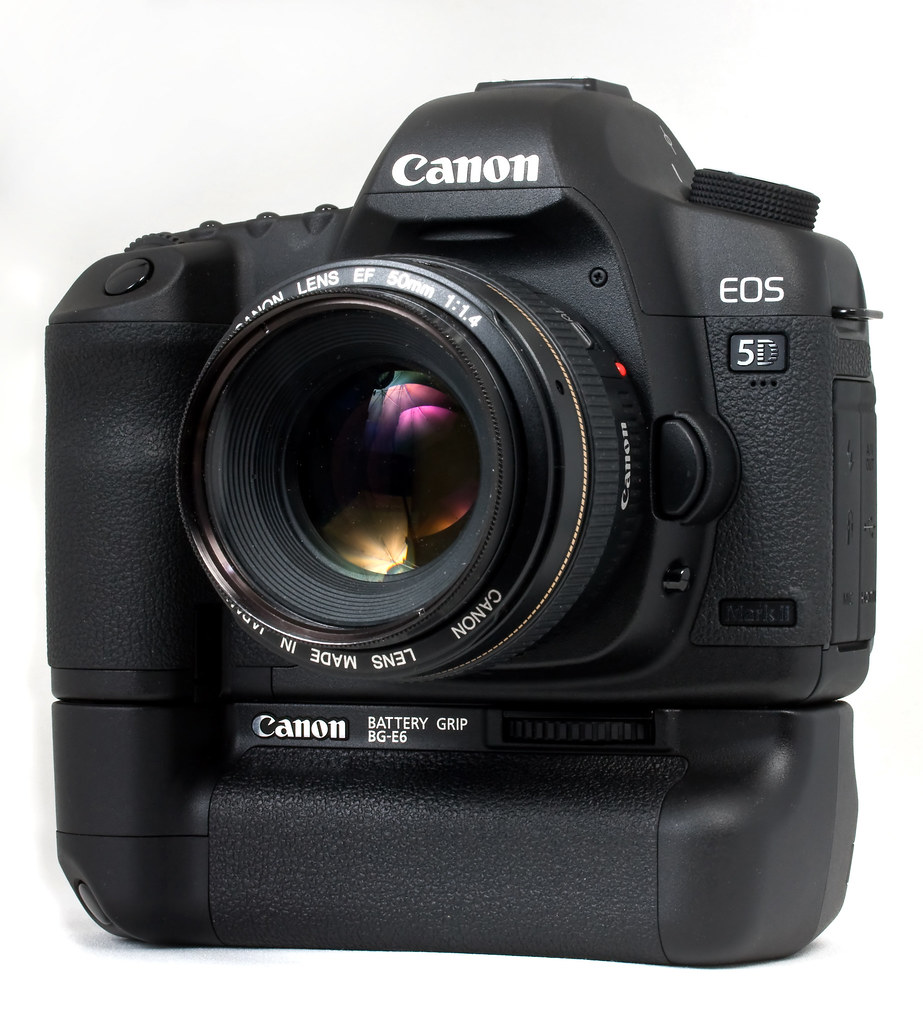
Canon 5D MkII

I know 2012 was the year of the MKIII and, as I write this, the 4 year old MKII has just been officially retired, but I still use my MKII's daily both for stills and video and don't see the need to replace or retire them just yet. This camera made me a better photographer and it taught me about video production. 2012 was the year this kind of multi-media production officially became part of my work remit so I have the MKII to thank for getting me out of the coding trenches (at least until they realize I don't know what I'm talking about). It's not often that a high tech gadget has such a long shelf-life.

Adobe Production Premium CS6

Work had been promising my this software since 2011 but in 2012 they finally delivered. Before that I had been making do with the consumer software Photoshop Elements and Sony Movie Studio. Both taught me a lot but I kept hitting problems with both that getting the professional software has helped overcome. I no longer have to leave a day just to render a project in the fear that it won't complete or it will introduce glitches. Premiere had a pretty steep learning curve but now now going back to Movie Studio feels like going from a car to a push bike. I'm glad I didn't have to buy it myself as it is quiet spendy but oh, so worth it.

Flipboard

There are several apps I use daily on the iPad and Flipboard is the ideal way to consume all sorts of niche and mainstream news. Flipboard is the modern Newspaper.

Downcast

If Flipboard is the modern newspaper then Downcast is the modern radio. Since TiVo came along I haven't watched live TV except in hotel rooms or at my parents house since. I still listen to NPR but not live anymore. I've been a follower of podcasts for years but Apple's idea of over the air syncing left a lot to be desired. Downcast was my stopgap until they sorted it out but now, even though Apple have their own podcast app, I'm sticking with Downcast.

Sennheiser HD 280 pro Headphones

I know it's the year of the new Apple ear-buds and super-expensive, rapper-endorsed headphones but my HD 280's are the last in a long line of Sennheiser headphones I've owned. They're not for going out but if you need to monitor audio in a loud environment their ear cups seal out most of the room noise. If you have to mix or edit on headphones they are naturally uncolored. They're boringly black but affordable and comfortable and another piece of tech I use daily and am glad for.

Filmmaking: How to Give and Take Notes Without Making Enemies

Filmmaking is a collaborative, artistic process involving people with egos and opinions. Just about everyone involved has ownership of some percentage of the final product and, especially if they are not getting paid or are getting paid very little, they are hugely invested in that final product being great or what’s the point for them being involved?

This can be a recipe for disaster in the pre- and post-production world. When you’re on set and in production the collaboration is face-to-face and the roles are defined and visible so it is easier to manage and to detect when something is heading in the wrong direction. In the pre- and post-production world where people communicate much more by email the potential for being misunderstood and for conflicts blowing out of proportion is so much greater. Often times the way we communicate is by asking for ‘notes’ or being given them whether we want them or not from people higher up the food chain.

There are two times we usually ask for and get notes: in script development and in the editing process. Getting notes, considering them and implementing them can make your film project better. It can also be frustrating, infuriating, it can make you very defensive and, if you blindly try to incorporate every note you’re given, it can make your film worse not better.


       Taking Notes

Be gracious when you are given notes especially if you asked for them. Again, this is especially true in the low/no budget filmmaking world. If you ask someone you respect to give you notes they are taking time out of their life to do this as a favor so don’t get dismissive or defensive with them if they say something you don’t agree with or like.

Don’t ask for notes for something you don’t actually want criticism on. If what you really want is a compliment, a pat on the back and an ‘at-ta-boy’ then send it to your mom. If you ask for criticism you will get it. Don’t waste your reviewer’s time asking for notes you have no intention of even considering because you think the piece is already finished.

Take care who you ask notes from. If you’re not the top of the food chain there are some people who you will have to take notes from. Beyond that only ask notes from people whose opinion you respect. When you ask for notes you are asking for criticism and you will usually get it. If you respect the person giving you notes you are much more likely to take their notes more seriously than the notes you’re getting from some faceless executive.

Consider the note givers position, experience and point of view. The notes you get from someone experienced in the process will be very different from the notes you get from someone who has never made a video in their life, however, both can add value. The more experienced filmmaker may see things you are not experienced enough to have noticed. The novice’s opinion may be much more in line with your target audience and so just as useful.

Be respectful of the opinion of those whom you have to ask notes from even if you’re doing it as a formality. Perhaps some backer wants a producer credit and wants to be involved in the process. Dismiss the money man at your peril. They are not just a source of cash; their ownership is just as valid as yours and you’re probably going to want them to back a bigger project in the future. Involve these people. Genuinely consider their notes. Thank them for being involved. Show them why their note might not work. Take the time to cut the section two ways if you have to and really show them why your way works. It behoves you to try to gently educate these people as you go especially if you may be working with them again.

Be specific about what you want notes about and the specific deadline you want them back by. Give people a reasonable but finite time to get back to you. Also, if there are areas you are specifically concerned with tell your note givers so that they can give you notes in that area.

You’re not entitled to notes from someone so ask politely and don’t make demands. This is especially true if you are asking for notes from someone who is not invested in the project but whose opinion you respect.
Try to be as objective as you can; try to leave your ego out of it. This is easier said than done when the project is your baby and you have so much time invested in it. Just remember that notes are not criticism. If some note makes your blood boil take a breath, an hour, a day or a week before crafting a response - never reply in anger.  Once your emotions have settled you may find something of value in these notes that you can still use.

Follow-up on every note. When you send out your next cut let people know what notes you have incorporated. If you haven’t incorporated a note into the cut explain to the note giver why. Always let a note giver know that they have been heard and that you’re not ignoring them. If they feel ignored they can damage your project.

Pick your battles - know when to fold and when to dig in. When someone higher up the food chain than you gives you comments you must address them. If you don’t agree with them know when to fight for what you want and when it is ok to give the reviewer their point. If you fight every note it will only serve to polarize your two positions over everything in the project.


        Giving Notes

If you offer a criticism be sure that it is specific and that you offer a solution to address the problem you see.
Here’s a note I received once “I’m not inspired but that might be because of the annoying music.” How do I address this? The music where? One person’s annoying makes another’s top ten list: of course I’ll be on the defensive if chose or even wrote the music. What do you want me to change it to? I don’t want to waste my time switching out the soundtrack over and over until I stumble on something this note giver likes. Instead give me some guide as how to fix the issue. Imagine the knee-jerk reaction I had to this note and how I had no idea how to address it. Now imagine how much more likely I would be to be able and willing to address your issue if it was phrased like this: “I don’t think the background music fits the chase scene. Can you find something a bit less Techno and a little more Jan Hammer?

Don’t use loaded or emotional language. For example, ‘annoying’, ‘hate’, ‘stupid’ will evoke strong reactions and put the filmmakers on the defensive rather than the collaborative.

Be concise and specific. Don’t use a full paragraph if a few words will do. It’s a waste of your time and the filmmaker’s.

Notes are so much more digestible if you can come up with a couple of positive things to say before you go on to list a whole load of things you see as issues. As the old saying goes, you catch more flies with honey than with vinegar. Even if you think what you just saw or read needs a lot of work it is rarely difficult to find something nice to say. If everything you say is negative your filmmaker will be on the defensive and will find it hard to consider anything you said or your opinion in the future. It’s also worth ending on a positive note too. Filmmaking is all about collaboration and the relationships you make will often continue long after this one project is finished.

Don’t make notes on things that cannot be addressed at this point. If you’re asked to make notes on the edit and this is the first time you’ve seen the project and you hate the script you can’t tell the filmmaker that he has to rewrite or recast the whole thing. He might not even be able to film any pickup shots at this point so try to work with what is there. Suggest edits to mitigate those elements you strongly dislike.

Be polite. Don’t be condescending. Give notes you would want to receive.

Be quick in getting notes back. If you can’t get notes back to the filmmaker inside the deadline or you don’t have time at all it takes less than a minute to send an email explaining why you won’t be able to deliver within the time frame or at all.

If you think the person or project is beyond help don’t burn bridges. Be polite, don’t waste your time and just bow out of the project. It’s a small world. You will meet this person again and you may have to work with them. If you tear this project to shreds that’s what they will remember about you.

Read through or watch the subject once before you make any notes at all. After that first pass write down your general first impressions of the whole work. Also describe and plot or character issues you have that are confusing you. When you go through after the first time you comments can be more granular. Make comments about individual scenes and then page by page or minute by minute.


        Other Links

Creative Myth Busting: If You Build It They Will Come

A lot of so called experts are out there proffering advice for creatives trying to 'make it'. Like everything on the interwebs, some of that advice is good and some of it is bad. Here's one piece of advice some creatives who have already made it often give to those who want to make it:

Just concentrate on the work and success will follow. If you make good work you will be found ... If you build it they will come.

Perhaps this advice was valid two decades ago but even then I doubt it. Today it is misinformed advice that could stunt your progress. If you build it you are just 1 of millions of others who have built something. The noise to signal ratio in the modern world is massive and no one has time to sift through the whole of the web to find you. If your profile isn't high you will not be found; you will not get the gig; you will not rise to the top of the pile.

Creating the work is only half the job. The other half, I am sad to say, is self-promotion. It goes against everything I stand for but if you're not out there tweeting to tens of thousands of followers; if every picture you put on Flickr, or video you put on YouTube, or song you put on Soundcloud doesn't get thousands of hits you might not be failing as an artist but you will not 'make it'.

Put this advice down to sour grapes on my part at your peril. There are thousands of good photographers out there and there are a relatively few great ones. A lot of great photographers out there you have never heard of. A lot of OK photographers are web stars getting all the attention.

An artist needs an audience. Without an audience the work is masturbatory.  How you get that audience without selling out? That I cannot tell you. I still naively believe that an artists should make work that they themselves like but if you want an audience you must keep your viewer (or listener, or reader) in mind somewhat. How much you court that audience while you're making the work is up to you and your conscience but I'd recommend that you start trying to build that audience just as soon as you have the fundamentals of your craft down. If you wait you will be too late.